
Duration: 15 days
Mount Everest Base Camp Trek is adventurous tour package right on the foot of World’s highest mountain cliff. EBC is an exciting place and gives lifetime experience to observe nature in the snowy m Read more ➤
We stand together! Support Ukraine against Russian aggression!

Overview
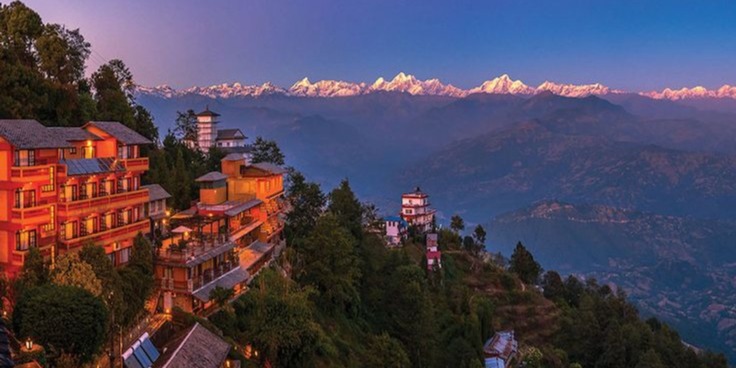
An easy 3-day trek near Kathmandu, taking you through the forests of Shivapuri National Park to the hilltop villages of Chisapani and Nagarkot. Enjoy panoramic Himalayan sunrises, Tamang culture, and stunning views of Langtang and Ganesh Himal — all without leaving the Kathmandu Valley.
Highlights
Description
The Sundarijal Chisapani Nagarkot Trek is one of the most rewarding short treks near Kathmandu, offering a complete Himalayan experience packed into just three days. Perfect for travelers with limited time, first-time trekkers, or anyone looking for an easy introduction to trekking in Nepal, this route combines forest trails, traditional village life, and some of the best sunrise and sunset viewpoints in the Kathmandu Valley — all without venturing into high-altitude or remote terrain.
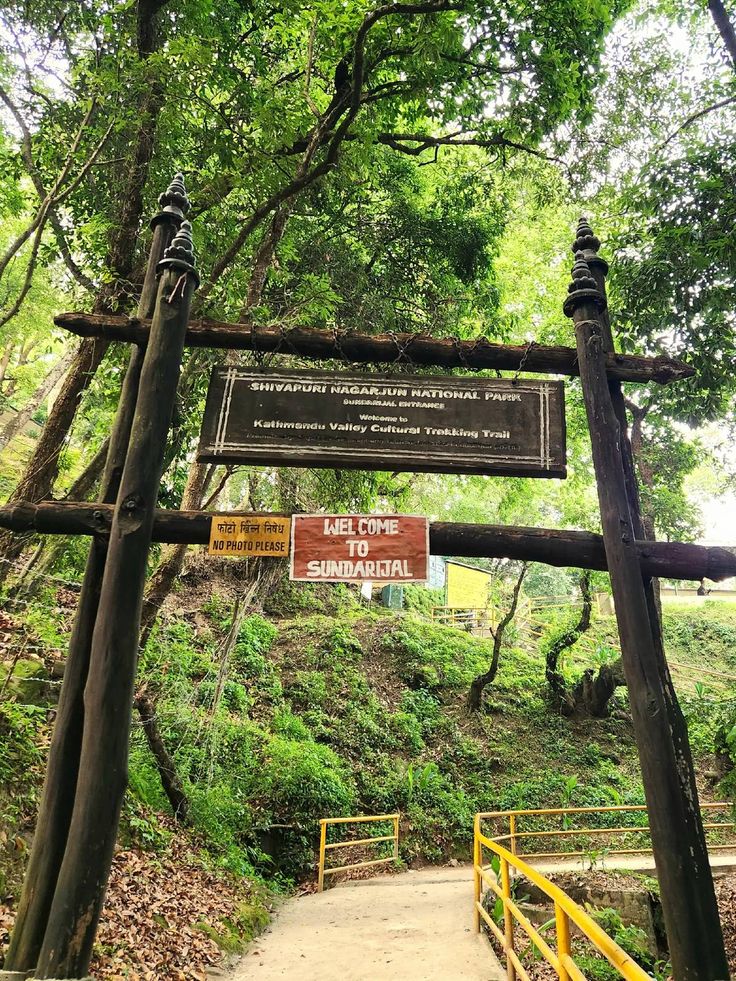
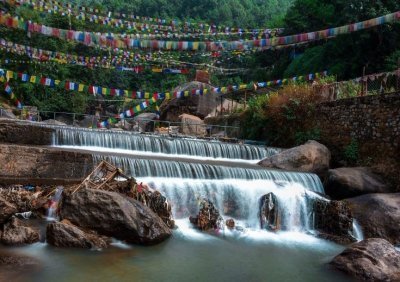
The trek begins at Sundarijal, a small settlement just an hour's drive from Kathmandu and the main gateway into Shivapuri Nagarjun National Park. From here, the trail climbs steadily through dense forests of oak, pine, and rhododendron, passing waterfalls, stone staircases, and the Tamang village of Mulkharka before reaching Chisapani, a peaceful hilltop settlement with sweeping views of the Langtang and Ganesh Himal ranges. The following day is the heart of the journey — a longer trek through rolling hills, terraced farmland, and rural villages like Pati Bhanjyang and Chauki Bhanjyang, where daily life continues much as it has for generations. The trail eventually climbs to Nagarkot, one of the most celebrated viewpoints in Nepal, renowned for its panoramic sunrise and sunset views over the Himalayas, including Everest on exceptionally clear days.
Beyond the scenery, the trek offers genuine cultural immersion. Trekkers pass through Tamang communities along the way, experiencing local hospitality, simple teahouse living, and a slower pace of life just beyond the edge of the capital. With well-marked trails, moderate walking hours, and a maximum altitude of only 2,175 meters, the route is accessible to most travelers regardless of prior trekking experience, while still delivering the kind of mountain views and forest wilderness usually associated with much longer expeditions.
Ideal for families, solo travelers, and small groups alike, the Sundarijal Chisapani Nagarkot Trek is best done in spring or autumn for the clearest skies and most vivid mountain panoramas. Whether combined with a short cultural stop in Bhaktapur on the return journey or done as a standalone adventure, this trek captures the essence of the Himalayas in a format that fits comfortably into any Nepal itinerary.
What's included
Itinerary
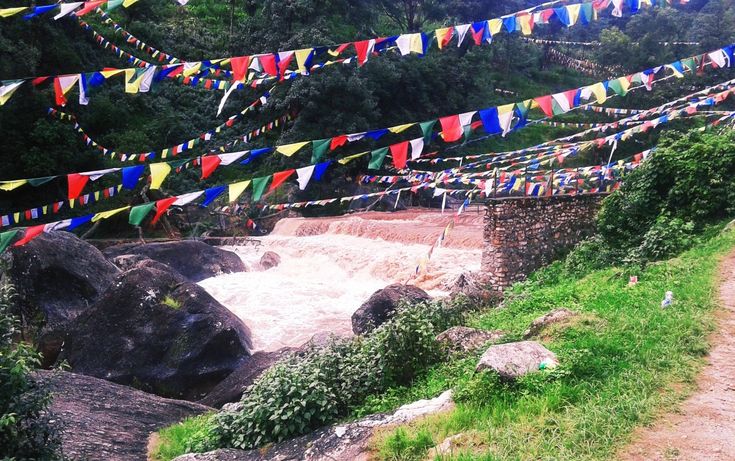
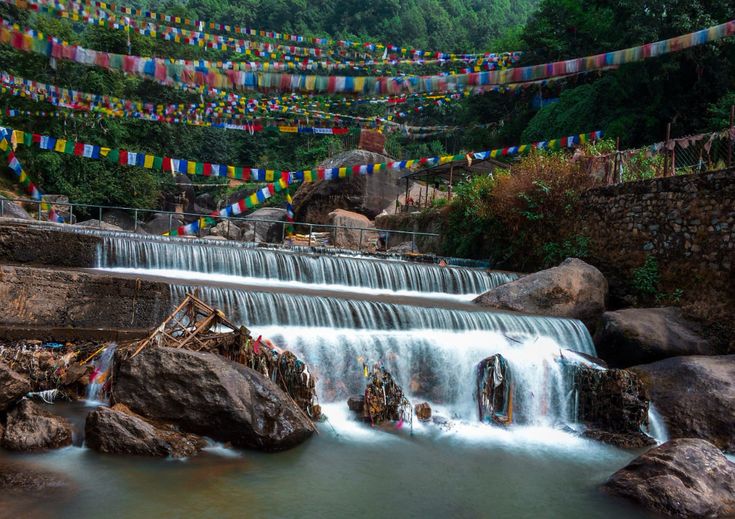
The day begins early with a roughly one-hour private vehicle transfer from Kathmandu to Sundarijal (1,460 m), a small settlement on the northeastern rim of the Kathmandu Valley that also serves as the main entrance to Shivapuri Nagarjun National Park. After registering permits at the park checkpoint, the trail immediately begins climbing on a stone-paved staircase that runs alongside a large water pipeline supplying Kathmandu — a legacy of the old hydropower and drinking-water scheme built here decades ago. Waterfalls tumble beside the trail in the first hour, and the forest closes in quickly, shifting from open scrub to dense stands of chir pine, oak, and rhododendron as the elevation increases. This first stretch is the steepest of the day and can feel demanding on legs that haven't yet warmed up, so a slow, steady pace pays off. After roughly two hours of climbing, the trail reaches Mulkharka (around 1,895 m), a small Tamang village with a handful of teahouses where trekkers typically stop for tea, noodles, or a light breakfast while taking in the first real views back over the Kathmandu Valley. From Mulkharka, the trail continues climbing more gradually through thicker forest — this is prime terrain for spotting Himalayan langurs and a wide variety of birdlife, since Shivapuri is one of the most biodiverse protected areas close to the capital. The path eventually crests near Borlang Bhanjyang (around 2,440 m), the high point of the day, before descending gently for the final stretch into Chisapani ("cold water," around 2,215 m). Chisapani is a small ridge-top settlement of lodges strung along the trail, and on a clear afternoon it offers the trek's first real panorama — Langtang Limal, Ganesh Himal, and the Jugal range unfolding to the north. The evening is spent at a teahouse here, with dinner and an early night in preparation for a longer day ahead. Many trekkers set an alarm to catch sunrise from the ridge just above the village before breakfast, weather permitting.
This is the longest and most varied day of the trek, so an early start — often before 6 a.m. to catch the sunrise from Chisapani itself — sets the tone. After breakfast, the trail drops fairly steeply through forest and terraced farmland toward Pati Bhanjyang (around 1,770 m), a village at the bottom of a valley that marks the lowest point of the day and a natural junction where routes toward Helambu and Langtang split off from the Nagarkot trail. From here the path undulates through a mix of cultivated fields, scattered farmhouses, and patches of community forest, climbing gradually to Chauki Bhanjyang (around 1,930 m), a good spot for a mid-morning tea break and, often, lunch depending on pace. The trail beyond Chauki Bhanjyang becomes noticeably more rural, weaving through small hamlets where daily life continues much as it has for generations — women carrying doko baskets of fodder, buffalo grazing on terraced slopes, children walking to school along the same trail. From here the route begins a longer, steadier climb toward Thakani (around 2,240 m), passing through pine and rhododendron forest again as the trail regains altitude. The final push into Nagarkot (2,175 m) follows a broad ridge with increasingly open views, and by the time trekkers reach the town's outskirts, legs are usually tired but the payoff is immediate: Nagarkot is one of the most celebrated viewpoints in the Kathmandu Valley, and on a clear late afternoon the sunset over the Himalayan range — from Dhaulagiri in the west to Everest and Kanchenjunga far to the east on exceptional days — is a fitting reward. The night is spent at a lodge in Nagarkot, with many properties offering rooms specifically oriented toward the mountain panorama.
The final morning starts before dawn, typically around 5:30 a.m., with a short walk up to Nagarkot's main viewing tower (2,175 m) or a nearby vantage point to watch the sunrise strike the Himalayan range. This is often considered the single best moment of the trek: as the sky lightens, the mountains change color in sequence, and on clear mornings the visible range stretches from Annapurna and Manaslu in the west across Ganesh Himal, Langtang, and the peaks around Rolwaling, sometimes as far as Everest on the eastern horizon. After soaking in the view, trekkers return to the lodge for breakfast and a relaxed morning — some use the extra time for a short walk around Nagarkot's ridge trails or to visit the nearby watchtower for a second look at the panorama in better light. Around mid-morning, the group departs by private vehicle for the drive back to Kathmandu. Most itineraries build in an optional stop in Bhaktapur, the medieval Newar city roughly halfway down the descent, where an hour or two can be spent wandering Durbar Square, admiring the pagoda-style temples, pottery squares, and traditional brick architecture before continuing on to Kathmandu, arriving by early-to-mid afternoon. This flexible finish makes it easy to combine the trek with a cultural half-day without adding an extra night, bringing the trip to a close with a rounded mix of forest trekking, mountain views, village life, and heritage sightseeing all within three days.
Frequently Asked Questions
How much time does the Sundarijal Chisapani Nagarkot Trek – 3 Days Trek Near Kathmandu take?
Sundarijal Chisapani Nagarkot Trek – 3 Days Trek Near Kathmandu duration is 3 days.
Book Sundarijal Chisapani Nagarkot Trek – 3 Days Trek Near Kathmandu now just with Booking Deposit on TripsPointHow many days in advance I must book Sundarijal Chisapani Nagarkot Trek – 3 Days Trek Near Kathmandu?
You can book Sundarijal Chisapani Nagarkot Trek – 3 Days Trek Near Kathmandu at least in 7 days. Check availability calendar in "Book Now" form to see currently available dates.
Book Sundarijal Chisapani Nagarkot Trek – 3 Days Trek Near Kathmandu now just with Booking Deposit on TripsPointtraveler reviews
You may also like
Mount Everest Base Camp Trek is adventurous tour package right on the foot of World’s highest mountain cliff. EBC is an exciting place and gives lifetime experience to observe nature in the snowy m Read more ➤
Everest Base Camp Trek, is one of the foremost prevalent and unforgettable experience goals within the Himalayas. The landscape is impressive, bright peaks,impressive glaciers, ancient and precious Read more ➤
Nepal is located between India and Tibet, Nepal offers a fantastic array of attractions for tourists. It is best known as the home of the Mt. Everest but there is much more to the country than just Read more ➤
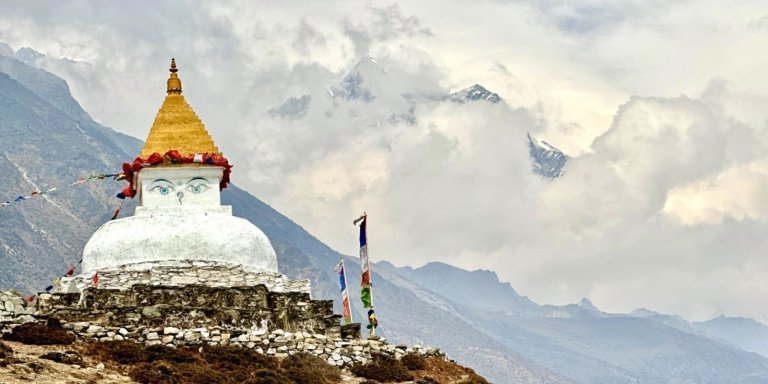
The Everest Base Camp Trek is a thrilling journey through Nepal's striking Himalayan landscapes and vibrant Sherpa culture. Traversing through lush forests and across pristine rivers, this adventure Read more ➤
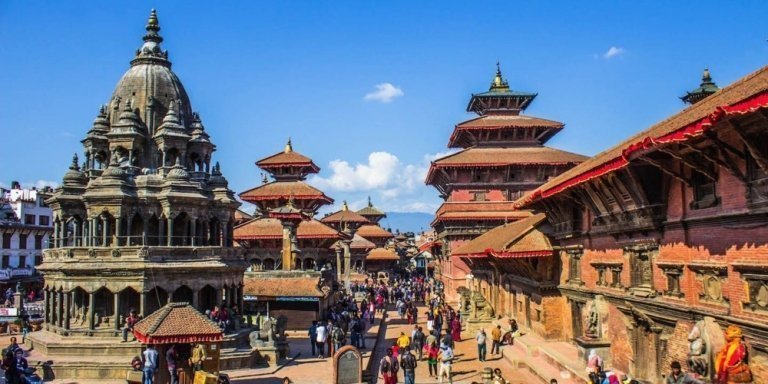
Delve deep into the beautiful cultural and natural diversities of Nepal’s three main regions —Kathmandu, Pokhara, and Chitwan on this nine-day Best of Nepal Tour. This amazing tour takes you to some of Read more ➤